The LAGPA 2025 Conference, organized by the Latin American Group for Public Administration (LAGPA), the regional branch of the International Institute of Administrative Sciences (IIAS), took place from 29 September to 1 October 2025 in Lima, Peru. The event was co-organized with the support of the University of Valle (Colombia), the Graduate School “Fernando Belaunde Terry” of the University San Ignacio de Loyola (USIL, Peru), the Economic Commission for Latin America and the Caribbean (CEPAL), the Development Bank of Latin America and the Caribbean (CAF), and the Latin American Center for Development Administration (CLAD).
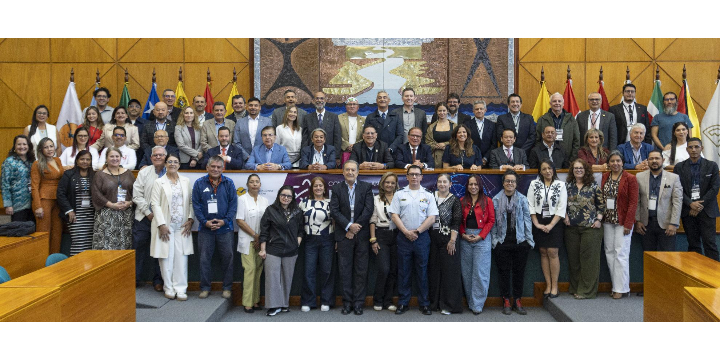
Hosted at USIL, the conference brought together around 300 leading academics, public officials, students, and experts from 10 countries across Latin America for three days of debate and reflection on the region’s strategic challenges in governance, democracy, and digital transformation.
Under the theme “Governance, Democracy, and Digital Government: Strategic Challenges for Latin American Public Administration,” participants explored how technology, democratic governance, and institutional capacity intersect in the digital era. Discussions focused on the transformative potential of artificial intelligence (AI) and data-driven tools in public institutions and policymaking, emphasizing the importance of ethical, inclusive, and people-centered innovation in government. The event gathered over 300 participants from at least 10 countries from the Latin America and Caribbean region, reflecting the expanding reach and relevance of the network.
Opening the event, Raúl Diez Canseco Terry, Founder and President of the USIL Educational Corporation, underscored the importance of strengthening institutions, rebuilding citizen trust, and placing education at the heart of every reform. Speaking from China, he noted that the countries leading global progress have done so by investing in knowledge and values, the same path Peru must follow to achieve stability and sustainable development.
From Colombia, Guillermo Murillo Vargas, Rector of the University of Valle, addressed the LAGPA research community, wishing participants a productive academic exchange and expressing confidence that the discussions in Lima would enrich regional collaboration and strengthen academic ties across Latin America.
In his remarks, Voruganti Srinivas, President of the International Institute of Administrative Sciences (IIAS) for the 2025–2028 term, reaffirmed the shared commitment to building agile, transparent, and citizen-oriented public institutions. “Together,” he stated, “we are forging a future where governance is inclusive, agile, and people-centered.” He expressed his gratitude to USIL and all institutional partners for their support and commended the dedication of Latin American professionals to advancing public administration in the region.
In his welcoming remarks, Rubén Darío Echeverri Romero, President of LAGPA, underlined the quality and richness of the debates, emphasizing that “the interventions throughout this conference have been highly enriching, offering innovative perspectives on the future of governance in our region.” He reaffirmed LAGPA’s commitment to promoting dialogue, fostering collaborative research, and strengthening institutional capacity across Latin America.
Closing the opening session, Mariela Sánchez Vásquez, Deputy General Manager of USIL, highlighted the university’s commitment to education, innovation, and the promotion of public management as tools for social transformation and regional development.
Highlights of the Conference
Over the course of three days, the conference featured a wide range of keynote lectures, thematic panels, and academic discussions addressing the main challenges of governance and digital transformation in Latin America. Speakers such as Javier Medina Vásquez (CEPAL–ILPES), Jaime Salomón (MINAGRI–Peru), Conrado Ramos (CLAD), Luis Solari de la Fuente (former Prime Minister of Peru), and Verónica Frisancho (CAF) shared insights on strengthening state capacities, fostering innovation, and promoting the ethical governance of technology.
Panel discussions organized by CEPAL, CAF, and CLAD explored issues such as public innovation, institutional modernization, digital inclusion, territorial equity, and sustainable development. Experts agreed that strengthening foresight capabilities and aligning digital transformation with human-centered values are essential to ensure more resilient and democratic governance in the region.
As Rubén Darío Echeverri noted, “these exchanges have brought valuable perspectives on the complex transformations shaping governance in Latin America, and they reaffirm our shared commitment to advancing a more transparent, participatory, and effective public administration.”
Commitment to Collaboration and the Future
By the conclusion of the event, participants reaffirmed their collective commitment to advancing ethical, transparent, and inclusive governance models capable of responding to the region’s social and technological transformations. The conference highlighted Latin America’s determination to innovate, strengthen institutions, and place citizens at the heart of public administration.
During the closing session, LAGPA announced the election of Prof. Edgar Varela Barrios as its new President for the 2025–2028 term. More information at https://www.iias-iisa.org/news/lagpa-announces-new-president-for-the-term-20252028
Access Reports, Photos, and Videos
The daily reports (relatorías) in Spanish, along with a gallery of photos and recorded sessions, are available on the official event website (below).

 LAGPA Conference - Website -
Link
LAGPA Conference - Website -
Link
 LAGPA2025 Conference Report (SPA) -
PDF (230 KB )
LAGPA2025 Conference Report (SPA) -
PDF (230 KB )